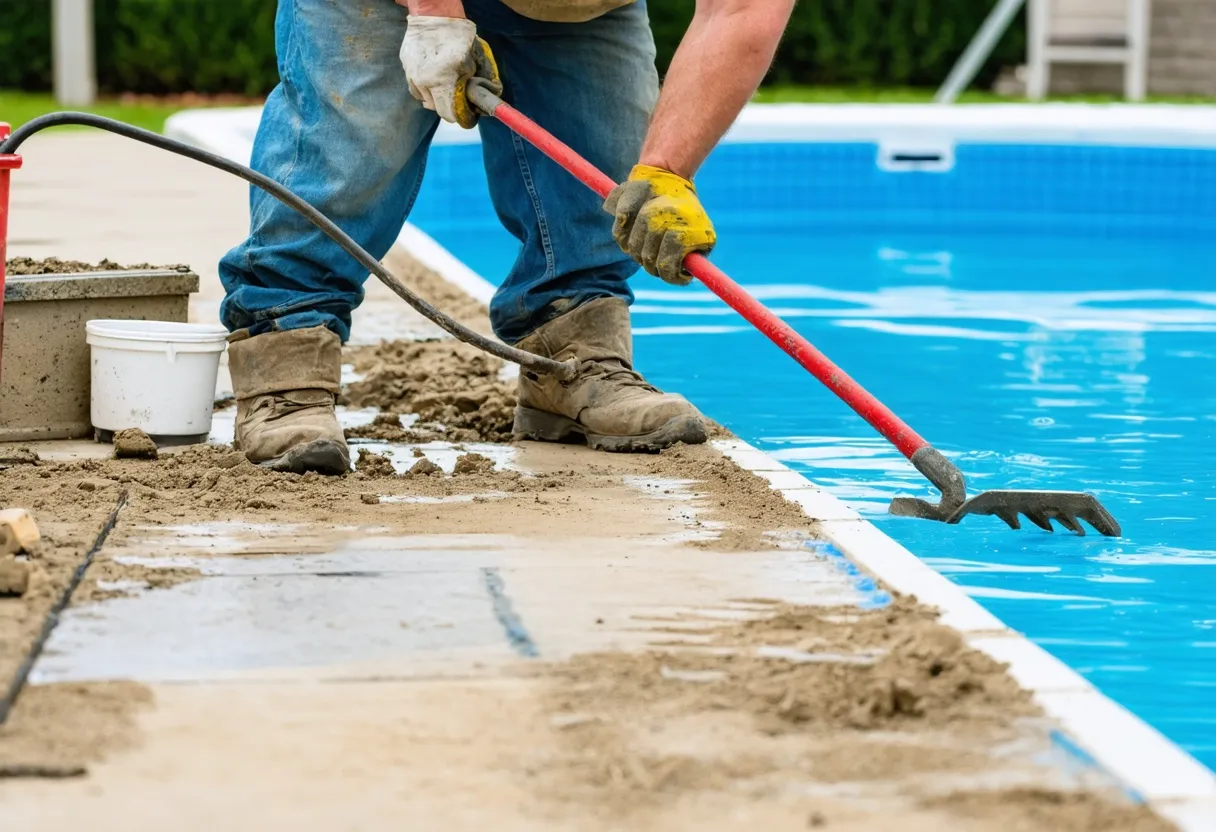
If you're searching for a pool builder in Mauldin, SC, you already know the hard part isn't finding someone who pours gunite or drops in a fiberglass shell -- it's finding a team that understands how a pool actually gets built on Piedmont clay, through two overlapping permitting jurisdictions, without the surprises that turn a spring groundbreaking into a fall backyard. We build custom pools in Mauldin, SC and across the Greenville Upstate with that exact problem in mind: soil and grading first, paperwork second, design third -- because if the first two aren't right, the design never gets built on schedule or on budget.
This page walks through everything that goes into a pool project in this market -- pool types, what things actually cost here, financing, permitting across Mauldin and Greenville County, the build timeline, equipment, decking, spas, maintenance, and how to vet a builder before you sign a contract. If you want the short version, start on our Pool Construction Greenville home page and reach out; if you want the long version, keep reading.
01Why a Local Pool Builder Matters in Mauldin
Pool construction is not a generic trade you can import from another region and expect identical results. The Upstate sits in the Piedmont, and that geography drives almost every early decision on a residential pool project: how deep you can dig before hitting rock or heavy clay, how water moves across a lot after a summer thunderstorm, and which jurisdiction's inspector shows up to sign off on your excavation and pre-gunite steel. A builder who only works from a spec sheet designed for sandy coastal soil or flat Midwest lots will misprice your grading, underestimate your drainage needs, and hand you change orders mid-project.
A local team also means fewer scheduling gaps between trades. Gunite crews, plumbers, electricians, tile setters, and decking crews all have to show up in sequence, and in a market where several builders are competing for the same subcontractors during peak season (roughly March through August), a builder with established local crews keeps your project moving instead of sitting half-finished for weeks while everyone waits on the next available gunite truck.
02Pool Types We Build: Gunite, Vinyl Liner, and Fiberglass
There is no single "best" pool type -- the right choice depends on your budget, your timeline, your lot's soil conditions, and how much customization you want. Here's how the three main construction methods compare for a Mauldin backyard.
Gunite (Concrete) Pools
Gunite pools are built by spraying a concrete-and-sand mixture over a rebar frame, which is then finished with plaster, pebble, or a quartz aggregate. This is the most customizable option -- any shape, any depth, integrated spas, tanning ledges, vanishing edges, and custom water features are all realistic with gunite. It's also the most labor-intensive and the slowest to build, typically because the concrete needs curing time between phases and because gunite work is more sensitive to soil conditions than vinyl or fiberglass.
In Piedmont clay, gunite is often the more forgiving choice for irregular or sloped lots because the shell is formed on site rather than dropped in as a single unit -- crews can adapt the excavation to the actual soil profile they find, rather than needing a pre-manufactured shape to fit a hole. We go into shape options, finish choices, and structural detail on our dedicated gunite pool construction page.
Vinyl Liner Pools
Vinyl liner pools use a steel, polymer, or concrete wall structure with a custom-cut vinyl liner stretched over a sand or vermiculite base. They're generally the lowest up-front cost of the three types and can still be built in nearly any shape, which makes them a popular choice for homeowners who want a large pool without a gunite-level budget. The tradeoff is that liners typically need replacement every 7-12 years depending on water chemistry and sun exposure, and the surface has a softer feel that some homeowners love and others find less premium than plaster or fiberglass gelcoat.
Vinyl liner construction is also somewhat more tolerant of clay-heavy soil than fiberglass because, like gunite, the wall panels are assembled on site rather than requiring a single pre-formed shell to be craned into a precisely excavated hole. We cover liner materials, wall systems, and replacement cycles on our vinyl liner pool page.
Fiberglass Pools
Fiberglass pools arrive as a single pre-manufactured shell that's craned into an excavated hole and backfilled. They're the fastest to install -- often just days from delivery to water, compared to weeks or months for gunite -- and the gelcoat surface resists algae growth better than plaster, which typically means lower ongoing chemical costs. The limitation is shape and size: you're choosing from a manufacturer's mold lineup rather than a fully custom design, and very large or unusually shaped pools aren't available in fiberglass.
Fiberglass also demands the most precise excavation and grading of the three types, because the shell has to sit level and fully supported on an engineered base -- this is exactly where Piedmont soil conditions matter most, and it's a step we do not shortcut.
03Design and Customization
Whether you build in gunite, vinyl, or fiberglass, design starts with how you actually plan to use the pool. A family that wants a shallow play shelf for young kids, a lap lane for exercise, and a separate spa for the adults needs a very different layout than a homeowner who wants a minimalist rectangle for laps and nothing else. We walk every client through:
- Shape and footprint relative to lot size, setbacks, and existing landscaping or trees
- Depth profile -- consistent depth for swim-focused pools versus a deep end for diving or a shallow tanning ledge for lounging
- Water features such as sheer descents, bubblers, deck jets, or a vanishing edge where grade allows
- Lighting -- LED color-changing versus fixed white, and where fixtures sit for evening use
- Integration with an attached spa, sun shelf, or swim-up bar
- How the pool reads from the house -- sightlines from the kitchen or primary bedroom matter more to most homeowners than they expect going in
Custom gunite construction gives the widest design latitude since the shell is formed to your exact drawings rather than selected from a catalog, which is why most fully custom, feature-heavy projects in this market end up gunite even when the homeowner started out considering vinyl.
04Piedmont Soil, Grading, and Terrain Conditions
This is the part of the process most out-of-market builders and even some local ones gloss over, and it's usually where budget overruns start. Upstate South Carolina sits on Piedmont geology -- dense red clay over a fractured rock base, with rock depth varying significantly even between neighboring lots. That variability matters for three reasons.
First, excavation cost is not predictable from a satellite photo. Two lots on the same street can have completely different rock depths, and hitting rock partway through a planned excavation means bringing in different equipment -- sometimes a hoe-ram or rock saw -- which changes both cost and schedule. We scope soil conditions before finalizing a contract price rather than after breaking ground, specifically to avoid that mid-project surprise.
Second, clay drains poorly. A pool deck, retaining wall, or backfill area built without proper drainage planning on Piedmont clay will hold water against the shell and surrounding hardscape, which over years contributes to cracking, efflorescence, and soil movement around the pool structure. Every project we build includes a grading and drainage plan -- French drains, positive slope away from the structure, and where needed, curtain drains -- sized to the specific lot, not a generic template.
Third, sloped lots are common across the Greenville Upstate's rolling terrain, and slope changes both engineering and cost. A pool built into a hillside typically needs retaining walls, engineered backfill, and sometimes a raised or partially exposed shell wall -- all of which should be priced and permitted up front, not discovered during excavation. If your lot has any noticeable grade change from the house to the proposed pool location, expect that to be one of the first things we assess on a site visit.
05Permitting: Mauldin and Greenville County
Pool permitting in this market is genuinely more complicated than in a single-jurisdiction market, and it's a common source of delay for homeowners who don't plan for it. Mauldin is an incorporated municipality with its own building department and inspection process, but many properties in the surrounding service area -- including parts of Greer, Anderson, Fountain Inn, and unincorporated pockets near Mauldin itself -- fall under Greenville County jurisdiction instead, or require sign-off that touches both depending on utility easements, setbacks, or annexation status. Getting the wrong permit application into the wrong office, or missing a required inspection sequence because two departments have different requirements, is one of the most common causes of a stalled pool project in the Upstate.
Before we ever pour concrete or set panels, we confirm which jurisdiction governs your specific parcel, pull the correct permit set for that jurisdiction, and sequence inspections (setback verification, pre-gunite or pre-backfill steel inspection, electrical bonding, final barrier/fence inspection) to match that department's actual process rather than a generic checklist. Barrier and self-latching gate requirements in particular are enforced strictly across every jurisdiction in this area, and we build fencing and barrier plans into the permit application from day one rather than as an afterthought at final inspection.
If your property sits near a jurisdictional line -- which is common for homeowners around Mauldin given how close the city limits run to unincorporated Greenville County and neighboring municipalities -- we verify jurisdiction before design work starts, not after a permit gets rejected.
06The Construction Timeline: Step by Step
Here's what the actual build process looks like once you sign a contract, using a typical gunite project as the reference timeline since it has the most steps. Vinyl and fiberglass follow a compressed version of the same sequence.
- Site evaluation and soil assessment. We walk the lot, assess grade, identify likely rock depth and drainage paths, and confirm setbacks against your survey.
- Design and engineering. Final drawings, structural engineering (required for permit submission in this region), and equipment layout are finalized and priced.
- Permitting. Application goes to the correct jurisdiction -- Mauldin's building department or Greenville County, depending on your parcel -- and we track review status rather than leaving it to chance.
- Excavation. Once permits are issued, excavation begins. This is where soil conditions found on site can adjust schedule if unexpected rock is hit -- something we flag immediately rather than after the fact.
- Steel and plumbing rough-in. Rebar structure is set and inspected, then plumbing lines for skimmers, returns, and main drains are run.
- Gunite shell (or wall panel/fiberglass shell set). The structural shell goes in. Gunite needs curing time before the next phase begins.
- Decking and hardscape. Concrete, pavers, or travertine decking is formed and poured around the shell, along with any retaining walls or coping.
- Tile, coping, and interior finish. Waterline tile is set, coping is installed, and the interior finish -- plaster, pebble, quartz, or vinyl liner -- goes in.
- Equipment installation and electrical. Pump, filter, heater, salt system, and automation are installed and wired, with electrical bonding inspected per code.
- Startup and water chemistry balancing. The pool is filled, equipment is started, and water chemistry is balanced before handoff.
- Final inspection and walkthrough. Barrier/fence inspection, final municipal sign-off, and a homeowner walkthrough covering equipment operation and maintenance basics.
Depending on scope and season, a gunite project in this market typically runs 3-6 months from groundbreaking to swimming, with plaster cure time and permit review timing being the two biggest variables outside our control. Fiberglass projects can move from excavation to water in as little as 2-4 weeks once permits are issued, and vinyl liner projects generally land in between.
07What Drives the Cost of a Pool in Mauldin
Pool pricing in this market varies more than most homeowners expect, and the variance almost always traces back to a specific set of cost drivers rather than random builder markup. Understanding these up front makes it much easier to compare quotes apples-to-apples.
- Pool type. Vinyl liner is typically the lowest entry cost, fiberglass sits in the middle for standard shapes, and gunite runs highest due to labor and customization, though a heavily customized fiberglass or vinyl project can approach gunite pricing.
- Size and depth. Cost scales with excavated volume and shell surface area, not just square footage -- a deep end adds cost disproportionate to the extra square footage it occupies.
- Soil and excavation conditions. As covered above, rock depth and clay drainage needs on your specific Piedmont lot can meaningfully shift excavation and grading cost versus a flat, rock-free site.
- Access. Backyards with tight side-yard access for equipment, or lots requiring a crane for fiberglass delivery over a house, add cost that a wide-open front-accessible lot won't incur.
- Decking material and square footage. Stamped concrete is the most economical; travertine, pavers, and natural stone cost more per square foot but change the entire look and feel of the space.
- Equipment tier. Variable-speed pumps, saltwater chlorination, heat pumps or gas heaters, and automation systems each add cost but also reduce long-term operating expense or add convenience.
- Added features. Attached spas, water features, tanning ledges, and lighting packages are priced as distinct line items on top of the base shell.
- Fencing and barrier requirements. Code-required barriers add cost that varies by material choice and by how much of the yard already has qualifying fencing.
Because so many of these variables are lot-specific, we don't quote off a phone call -- we price based on an actual site visit that accounts for your soil, access, and design goals. For a detailed breakdown of pricing tiers by pool type and typical add-on costs in this market, see our pool cost and financing guide.
08Financing Your Pool Project
Most homeowners in this market finance some or all of their pool rather than paying cash outright, and the financing landscape has more options than people expect going in. Common paths include:
- Home equity loans or HELOCs -- typically the lowest interest rate option for homeowners with sufficient equity, since the pool investment is secured against the home.
- Pool-specific unsecured loans through lenders who specialize in this exact product, often with faster approval and no collateral requirement, at a somewhat higher rate than home equity products.
- Cash-out refinancing, which can make sense if current mortgage rates are favorable relative to a homeowner's existing rate.
- Builder-facilitated financing, where we connect clients with lending partners familiar with pool project draw schedules, which can simplify the process versus sourcing financing independently.
The right choice depends on your equity position, credit profile, and how the loan structure lines up with the phased payment schedule most pool contracts use (deposit, then draws tied to construction milestones like shell completion and decking). We walk through financing structure and typical monthly payment ranges by project size on our cost and financing page, and we're glad to talk through options specific to your situation before you commit to a design tier.
09Equipment and Automation Packages
The equipment pad is where long-term operating cost and convenience get decided, and it's worth spending real time on rather than defaulting to whatever's cheapest. Core components include:
- Pumps. Variable-speed pumps cost more up front than single-speed but typically cut pump energy use significantly by running at lower speeds for routine filtration, which matters over a pool's operating life.
- Filtration. Cartridge, sand, and DE (diatomaceous earth) filters each trade off differently on filtration fineness, maintenance frequency, and cost.
- Heating. Heat pumps are the efficient standard for extending the swim season through spring and fall in this climate; gas heaters heat faster but cost more to run and are typically chosen when quick heat-up for occasional use matters more than efficiency.
- Automation. App-based control systems let you manage pumps, heating, lighting, and water features from a phone, and can integrate scheduling so equipment only runs when needed -- a meaningful factor in long-term energy cost.
We size equipment to the actual pool volume and usage pattern rather than defaulting to a standard package, because oversized or undersized equipment both cost you money over the life of the pool -- oversized in upfront and energy cost, undersized in performance and equipment strain.
10Saltwater and Sanitization Systems
Saltwater chlorination has become the default choice for most new pool builds in this market, and for good reason: a salt cell generates chlorine on demand from dissolved salt, which produces gentler water on skin and eyes than manually dosed liquid or tablet chlorine, and reduces (though doesn't eliminate) the hands-on chemical management routine. Salt systems still require regular water testing and cell maintenance, and they're not chlorine-free -- they're a different delivery method for the same sanitizer.
Alternatives include traditional chlorine feeders, UV or ozone secondary sanitization paired with reduced chlorine demand, and mineral systems that supplement chlorine with copper/silver ionization. For most residential pools in the Upstate, we recommend salt as the primary system with automation-controlled dosing as a backup, but the right choice depends on your water source, whether you have a vinyl liner (which affects salt water chemistry balancing) or gunite/fiberglass shell, and how hands-on you want ongoing maintenance to be.
11Decking and Hardscape
Decking is often the single biggest visual driver of how a finished pool reads, and it's worth as much design attention as the water itself. Common options in this market:
- Stamped or broom-finished concrete -- the most budget-friendly option, available in a range of colors and patterns, and a solid choice for larger deck areas where premium material cost would add up quickly.
- Pavers -- individual units that allow easy spot repair (a cracked paver can be replaced without redoing the whole deck) and a wide range of color/pattern combinations.
- Travertine -- a premium natural stone that stays notably cooler underfoot in direct sun than concrete or darker pavers, a real consideration during Upstate summers.
- Natural stone and flagstone -- for a more organic, high-end look, often paired with landscape-integrated pool designs.
Beyond the deck surface itself, hardscape scope often includes retaining walls (particularly relevant on the sloped lots common across this region), outdoor kitchens, fire features, pergolas, and pool houses. All of these get planned into the drainage and grading strategy from the start -- adding a retaining wall or outdoor kitchen after the fact, once grading is finalized, is more expensive and more disruptive than including it in the original design.
Get your free quote
Tell us about your property and we'll follow up with next steps — no pressure, no obligation.
Ready to see what your site needs?
Get a free, no-obligation quote built around your property's actual conditions.